By Dr. Anagha Kanade Deshpande, MDS Orthodontics and Dentofacial Orthopaedics, Invisalign Certified Provider, Orion Dental Specialities, Kothrud, Pune.
If you have just started Invisalign, or are about to, you may have heard your orthodontist mention attachments, elastics, or chewies and wondered what they are. These small extras are a normal part of most Invisalign treatments, and they are there to help your aligners work properly. In this guide I explain each one simply, why it is used, and how to look after it.
I am Dr. Anagha Kanade Deshpande, MDS in Orthodontics and Dentofacial Orthopaedics and an Invisalign certified provider, practising at Orion Dental Specialities in Kothrud.
What Are Invisalign Attachments?
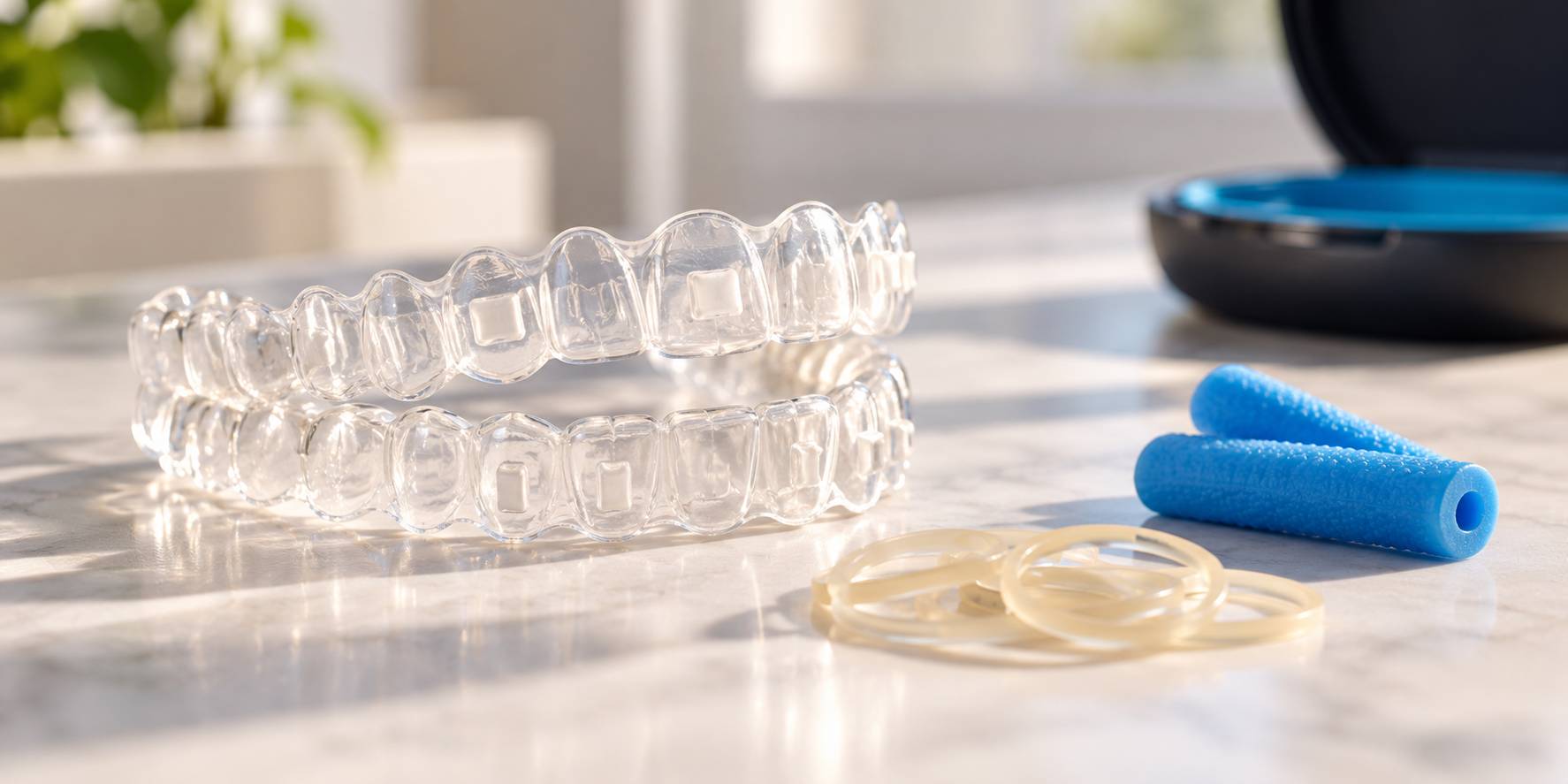
Attachments are small, tooth coloured bumps of composite material bonded onto certain teeth. They act like handles that give the aligners extra grip, so the aligners can push and turn teeth more precisely. Once the aligner is in, they are usually barely noticeable.
Why Do Some Teeth Need Attachments?
A smooth tooth surface can be hard for a clear aligner to grip, especially for movements like rotating a tooth, lifting or lowering it, or tipping a root. Attachments give the aligner something to push against. The number and position of attachments depend on your treatment plan, and some patients need only a few or none at all.
How Are Attachments Placed and Removed?
Placing attachments does not involve drilling or injections, and it is virtually pain free.
- The tooth surface is cleaned and lightly prepared so the material can bond.
- A thin template tray filled with tooth coloured material is placed over the teeth.
- The material is set with a curing light, and the template is removed, leaving the small attachments in place.
- At the end of treatment, the attachments are gently polished off and the teeth are smoothed.
What Are Invisalign Elastics (Rubber Bands)?
Some treatments, especially those that correct the bite, use small elastics hooked between the upper and lower aligners, or onto small buttons on the teeth. The elastics apply a gentle pull that helps move the jaws and teeth into a better bite. They are only used when your plan needs them, and they should be worn exactly as advised and changed regularly.
What Are Aligner Chewies?
Chewies are small, soft foam cylinders that you bite on for a few minutes after putting your aligners in. They help the aligners sit fully and snugly on your teeth, which helps them work as planned. They are simple to use and especially helpful in the first few days of a new aligner set.
Attachments, Elastics, and Chewies at a Glance
Here is a quick comparison of what each one does.
| Item | What It Does | Good to Know |
| Attachments | Give the aligner grip to move teeth precisely | Tooth coloured, polished off at the end |
| Elastics | Gently pull the bite into a better position | Worn as advised, changed regularly |
| Chewies | Help the aligner sit fully on the teeth | Bite on them for a few minutes after inserting |
Do Attachments Hurt or Damage Teeth?
Attachments are bonded to the surface of the tooth and do not damage it when they are placed and removed by your orthodontist. Mild pressure when a new aligner set is fitted is normal, and it is a sign that the aligners are doing their job.
Caring for Attachments and Elastics
A few simple habits keep your treatment on track.
- Brush carefully around the attachments, as plaque can collect at their edges.
- Limit strongly coloured foods and drinks like tea, coffee, and turmeric, which can tint attachments over time.
- Take your aligners out before eating, and brush before putting them back in.
- If an attachment comes off or an elastic hook breaks, let us know, so treatment stays on track.
- Wear your elastics for the hours advised. Skipping them can slow the bite correction.
How Much Do These Add to the Cost?
Attachments, elastics, and chewies are normally part of your overall Invisalign treatment plan rather than separate add-ons. The total cost depends on the complexity of your case, and you can read more in our Invisalign cost guide. We also offer direct clinic instalment plans.
Frequently Asked Questions
Q: Does everyone need Invisalign attachments?
Not everyone. Attachments are added only where the aligner needs extra grip to move a tooth precisely, such as for rotations or bite changes. Some patients need several, some need only a few, and some need none. Your treatment plan shows exactly where they will go.
Q: Are Invisalign attachments noticeable?
They are tooth coloured and small, so most people do not notice them in everyday conversation, especially with the aligner in. You may be more aware of them yourself in the first few days, but this usually fades quickly.
Q: Do attachments damage your teeth?
No. They are bonded to the surface of the tooth and are gently polished off at the end of treatment. When placed and removed by your orthodontist, they do not harm the enamel.
Q: What are Invisalign rubber bands for?
Elastics, or rubber bands, are used in some treatments to help correct the bite, such as an overbite or underbite. They hook between the upper and lower aligners and apply a gentle pull. They only work if worn as advised, so following the plan is important.
Q: How do I use aligner chewies?
After putting your aligners in, bite gently on the chewie and move it around your mouth for a few minutes, especially over the back teeth. This helps the aligners sit fully on your teeth so they can work as planned.
Conclusion
To sum up: attachments give your aligners grip, elastics help correct the bite, and chewies help your aligners sit properly. Each one has a simple job that helps your treatment work as planned. If you would like to know what your own Invisalign plan would involve, book a consultation with us at Orion Dental Specialities in Kothrud.
Medical disclaimer: This article is for general information only. Every treatment plan depends on an individual clinical assessment. Please book a consultation for advice specific to you.
About the author: Dr. Anagha Kanade Deshpande holds an MDS in Orthodontics and Dentofacial Orthopaedics, is a Fellow of the World Federation of Orthodontists and an Invisalign certified provider, and practises at Orion Dental Specialities in Kothrud, Pune.