By Dr. Rohan Deshpande, MDS Prosthodontics and Crown and Bridge, at Orion Dental Specialities, Kothrud.
Patients often walk into my clinic saying “I think I need a crown” when they actually need a bridge, or the other way around. Some need an implant instead. The difference matters because each procedure does something different, suits different cases, and costs differently.
I am Dr. Rohan Deshpande. I hold an MDS in Prosthodontics and Crown and Bridge, the discipline that literally specialises in these restorations. This guide will clarify what each procedure does, when each is the right choice, and what each costs in Pune in 2026.
Quick Answer: Crown vs Bridge in One Minute
A dental crown covers a single damaged or weak tooth. It is a custom-made cap that fits over the existing tooth, restoring its shape, strength, and appearance.
A dental bridge replaces one or more missing teeth. It uses the adjacent teeth as anchors, with crowns on each side supporting a false tooth (or teeth) in the middle.
A dental implant is a separate option that replaces missing teeth without involving the neighbouring teeth at all. We cover the crown vs bridge vs implant decision below.
When You Need a Dental Crown
Three common situations call for a crown.
After a Root Canal
Root canal treatment removes the nerve from a tooth. Without the nerve, the tooth becomes brittle and is at high risk of cracking. A crown protects the tooth and restores its strength. Most root canals are followed by a crown within 4 to 6 weeks. Skipping this step is one of the biggest reasons root canals fail clinically. The tooth fractures below the gum line and ends up needing extraction.
For a Cracked or Heavily Filled Tooth
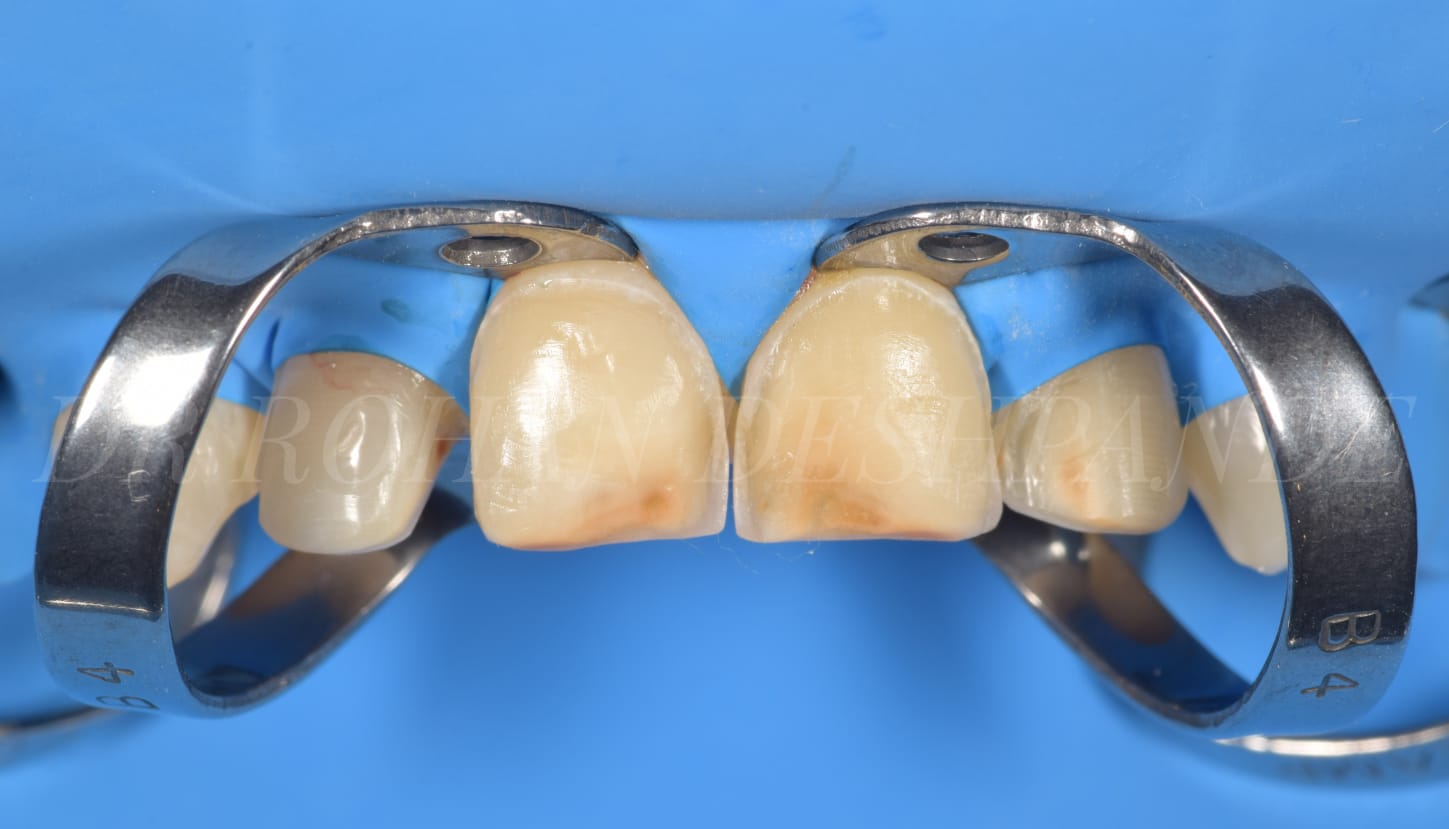
If a tooth has lost more than half of its natural structure through a large cavity, a fracture, or multiple fillings stacked over time, a crown holds the remaining tooth together. Without it, the tooth often breaks under normal bite forces.
For Cosmetic Improvement
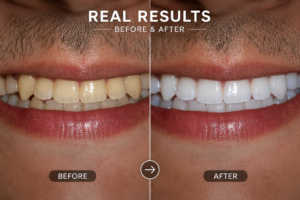
Crowns can transform the look of a tooth that is misshapen, discoloured, or worn down. This is one of the most common cosmetic dentistry treatments. We use porcelain or zirconia for visible teeth so the crown matches your natural tooth colour and translucency.
When You Need a Dental Bridge
Two scenarios make a bridge the right choice.
One or Two Missing Teeth with Healthy Neighbours
A traditional bridge uses crowns on either side of the gap to support a false tooth in the middle. The neighbouring teeth need to be healthy enough to act as anchors. They are filed down to fit the crowns. The whole process takes about 2 visits over 1 to 2 weeks.
When You Are Not a Candidate for Implants
Some patients cannot have implants due to bone loss, uncontrolled diabetes, smoking, or budget. A bridge is a reliable alternative that can last 10 to 15 years with good care. We discuss both options at the consultation so you have all the facts.
Types of Dental Crowns and Their Cost in Pune
Four crown types are commonly used in Pune. Each has trade-offs in cost, appearance, and durability.
Metal Crowns (4,500 to 8,000 rupees)
The strongest option, made of gold or base metal alloy. Best suited for back molars where strength matters more than appearance. Lifespan: 20 to 30 years. Not used for front teeth because of visibility.
Porcelain-Fused-to-Metal or PFM Crowns (7,500 to 12,000 rupees)
A metal core for strength with a porcelain outer layer for appearance. Good for back teeth and some front teeth. Lifespan: 10 to 15 years. Can show a dark line at the gum margin over time as gums recede slightly.
Zirconia Crowns (12,000 to 20,000 rupees)
All-ceramic, tooth-coloured, and extremely strong. Suits front and back teeth equally well. Lifespan: 15 to 20 years. Most patients at Orion choose this for the balance of strength and aesthetics.
E-Max or All-Ceramic Crowns (15,000 to 25,000 rupees)
The premium aesthetic crown, the most natural-looking option. Best for front teeth where appearance is critical. Lifespan: 10 to 15 years. Slightly less strong than zirconia, so not ideal for patients who grind their teeth.
Types of Dental Bridges and Their Cost in Pune
Four bridge types are common, suited to different scenarios.
Traditional Bridge (25,000 to 50,000 rupees for 3 units)
The most common type. Crowns on each side of the gap, false tooth in the middle. Strong, durable, lasts 10 to 15 years. Requires the adjacent teeth to be prepared.
Maryland Bridge (18,000 to 35,000 rupees)
Uses metal or porcelain wings bonded to the back of adjacent teeth instead of full crowns. Less invasive, no need to file down healthy teeth. Better for front teeth and lower bite-force areas.
Cantilever Bridge (20,000 to 35,000 rupees)
Uses just one adjacent tooth as an anchor instead of two. Used when only one neighbouring tooth is available. Less common today because of the lever forces it places on the single anchor tooth over time.
Implant-Supported Bridge (1,20,000 to 2,00,000 rupees for 3 units)
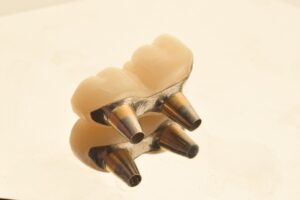
Uses 2 implants instead of natural teeth to anchor the bridge. Preserves your adjacent teeth completely. No filing down required. Lasts longer than traditional bridges (15 to 25 years). Best suited for patients missing 2 or more adjacent teeth who want the longevity of implants without an implant per tooth.
Crown vs Bridge vs Implant: Which Is Right for You?
The right choice depends on which tooth is involved, the health of your neighbouring teeth, your bone density, and your budget.
- Crown: when you have a damaged, cracked, or heavily filled tooth that is still in your mouth. Restores the existing tooth.
- Bridge: when you have one or more missing teeth with healthy neighbours that can act as anchors. Faster and cheaper than implants. Lifespan 10 to 15 years.
- Implant: when you have one or more missing teeth and want the longest-lasting solution that preserves the neighbouring teeth. Higher upfront cost. Lifespan 25 to 30 years.
We assess all three at the consultation so you make an informed choice, not a pressured one.
What Happens at a Crown or Bridge Appointment
The typical process takes 2 visits over 1 to 2 weeks.
- Clinical examination and digital scan or impression of the affected area.
- Tooth preparation: filing down the tooth (for a crown) or the anchor teeth (for a bridge) to fit the new restoration.
- Temporary crown or bridge fitted while the final one is being made.
- The lab makes the final restoration in zirconia, PFM, or E-Max, usually 5 to 10 working days.
- Final fitting, bite checked, cement applied. You leave with the permanent restoration in place.
- A follow-up visit in 2 to 4 weeks to confirm fit and comfort.
How to Make Your Crown or Bridge Last Longer
Six habits will extend the lifespan of your restoration significantly.
- Brush twice daily with a soft-bristle brush.
- Use a water flosser or super-floss for bridges. Regular floss does not reach under the false tooth.
- Avoid biting hard objects like ice, pen caps, and nuts.
- Wear a night guard if you grind your teeth.
- Visit for professional cleaning every 6 months.
- Treat any underlying gum disease promptly. Gum recession is the biggest threat to a long-lasting crown.
Frequently Asked Questions
Q: How long do dental crowns and bridges last?
Zirconia crowns last 15 to 20 years. PFM crowns 10 to 15 years. Metal crowns 20 to 30 years. Traditional bridges 10 to 15 years. Implant-supported bridges 15 to 25 years. Lifespan depends on your oral hygiene, your diet, and whether you grind your teeth at night.
Q: Is a crown better than a filling?
It depends on how much of the tooth is damaged. Fillings work for small to medium cavities. When more than half the tooth is lost, a crown is needed to hold the remaining structure together. Your dentist will tell you which is right at the examination.
Q: Should I choose a bridge or an implant?
Implants preserve your neighbouring teeth and last longer, but cost more upfront and need sufficient bone density. Bridges are faster (2 visits versus 3 to 6 months) and cheaper, but require filing down healthy adjacent teeth. The right choice depends on your bone, your budget, and which teeth are involved.
Q: Is a crown procedure painful?
The procedure is done under local anaesthesia and is not painful during the work. Mild sensitivity for a few days after the temporary crown is fitted is normal. The final crown should not cause pain. Severe pain after fitting is not normal and should be reported.
Q: Can I eat normally with a bridge or crown?
Yes, after a short adjustment period of 3 to 7 days. Avoid extremely hard foods like raw carrots, hard candy, or ice in the first week. After that, normal eating is fine. With proper care, crowns and bridges work like natural teeth.
Conclusion
Crowns cover damaged teeth. Bridges replace missing teeth using neighbours as anchors. Implants are the long-term replacement option without involving neighbouring teeth. The right choice depends on your specific case, and that is why a clinical examination matters more than any online article.
If you are considering a crown, bridge, or implant, book a consultation at Orion Dental Specialities in Kothrud. I will walk you through every option and recommend what suits your case, with no pressure to decide on the day.
Medical disclaimer: All cost ranges on this page reflect typical 2026 Pune market data and are indicative. Specific quotes are provided only after a clinical examination at the clinic.
About the author: Dr. Rohan Deshpande holds an MDS in Prosthodontics and Crown and Bridge, the postgraduate specialty for these exact restorations. He practises at Orion Dental Specialities, Kothrud, Pune.