By Dr. Anagha Kanade Deshpande, MDS Orthodontics and Dentofacial Orthopaedics, Invisalign Certified Provider, Orion Dental Specialities, Kothrud, Pune.
If you have an overbite, you may be wondering whether clear aligners can correct it or whether you will need braces. The good news is that many overbites can be treated with Invisalign. The honest answer, though, depends on the type of overbite and how severe it is. In this guide I explain what an overbite is, when Invisalign works well, when another approach may be better, and what to expect from treatment.
I am Dr. Anagha Kanade Deshpande, MDS in Orthodontics and Dentofacial Orthopaedics and an Invisalign certified provider, practising at Orion Dental Specialities in Kothrud.
What Is an Overbite?
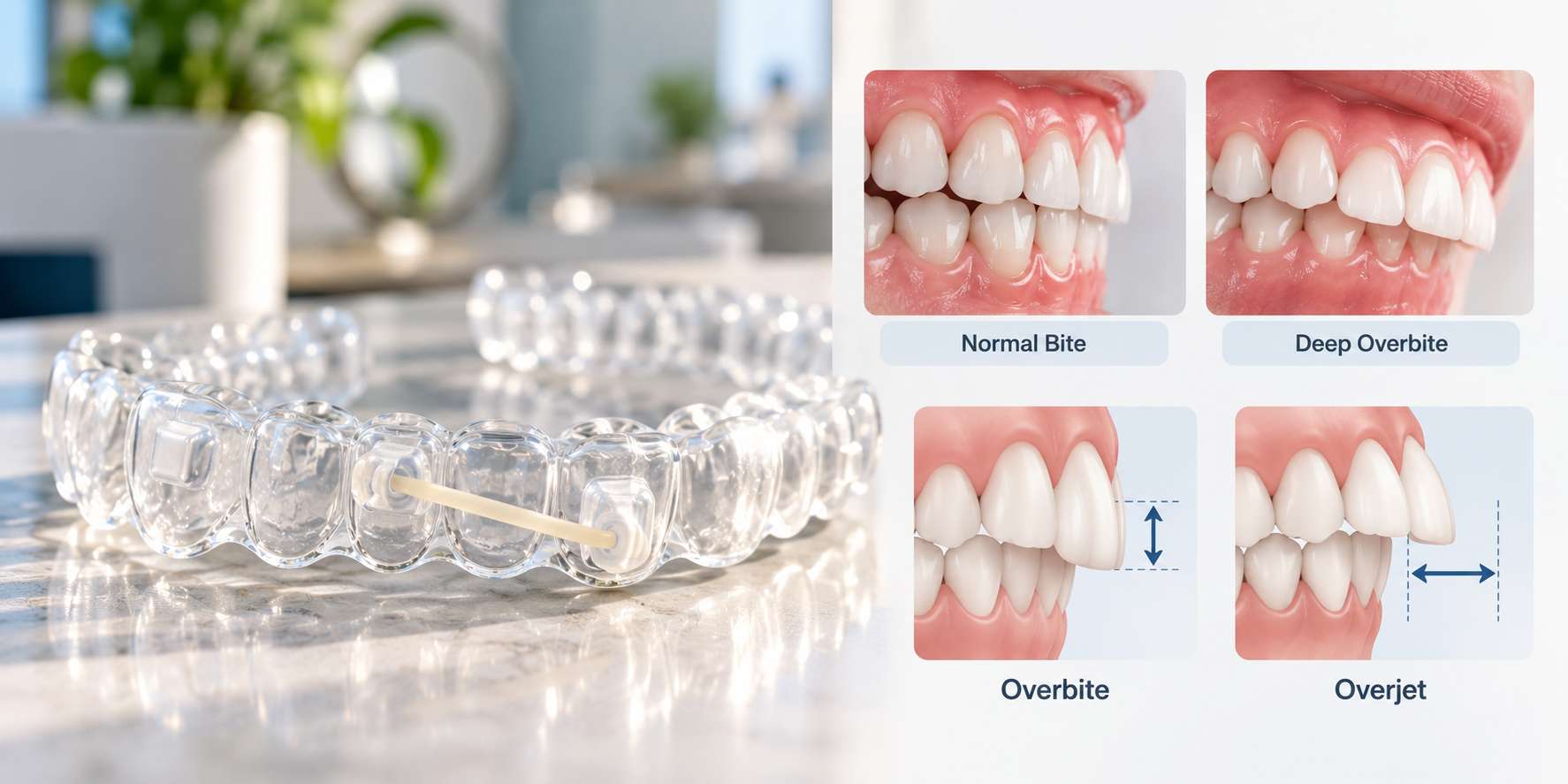
An overbite is when the upper front teeth overlap the lower front teeth by more than normal when you bite. A small overlap of about 2 to 3 mm is normal. People often also use the word overbite for upper teeth that stick out forward, which orthodontists call overjet. Put simply, overbite is how far the upper teeth cover the lower teeth vertically, while overjet is how far they stick out in front.
What Causes an Overbite?
When the upper front teeth vertically overlap the lower front teeth more than normal, it is called an overbite. There are several common causes.
- Genetics and the natural shape and size of the jaws.
- Childhood habits such as long term thumb sucking or pacifier use.
- Crowding or missing teeth that let other teeth shift.
- Tongue thrusting or a habit of pushing the lower jaw back.
Why Treat an Overbite?
Treating an overbite is often about more than looks.
- A deep bite can wear down the front teeth over time.
- The lower teeth can bite into the gums behind the upper teeth.
- It can contribute to jaw discomfort in some people.
- Correcting it can improve how the smile looks and how the teeth meet.
Can Invisalign Fix an Overbite?
In many cases, yes. Invisalign can treat many mild to moderate overbites caused by the position of the teeth. A well planned treatment may use attachments, small bite ramps built into the aligners, and elastics to bring the bite into a better position. The right option for you depends on an examination and a digital scan. You can read more about how these work in our guide to Invisalign attachments and elastics.
When Invisalign May Not Be Enough
A severe overbite caused mainly by the jaw bones, rather than the teeth, may need a different approach. In growing children, a growth guiding appliance or braces may be advised. In adults with a significant jaw difference, braces with or without jaw surgery may be recommended. Whatever your situation, we will explain all the options clearly so you can make an informed decision.
Invisalign vs Braces for an Overbite
Both Invisalign and braces can correct many overbites. Aligners are removable and discreet, while braces are fixed and can suit more complex bite corrections. The right choice depends on your case. If you are weighing up fixed braces, our guide to metal and ceramic braces explains those options.
How Long Does Overbite Treatment Take?
Bite corrections often take longer than simple straightening. The time depends on how deep the bite is and on wearing your aligners and elastics as advised. Rather than promising a fixed time, I will give you a realistic timeline at your consultation once I have examined your teeth.
What to Expect During Treatment
Here is what the journey usually looks like.
- A consultation, examination, and digital scan, with a preview of the planned result.
- Attachments placed on selected teeth, and your first aligners fitted.
- Changing to a new aligner set every one to two weeks, as advised.
- Wearing elastics if your plan includes them, and regular review visits.
- Retainers at the end to hold the corrected bite in place.
What Does It Cost?
The cost depends on the complexity of the bite correction and the length of treatment. You can find more detail in our Invisalign cost guide, and we offer direct clinic instalment plans to help spread the cost.
Frequently Asked Questions
Q: Can Invisalign fix an overbite?
Yes, in many cases. Invisalign can correct many mild to moderate overbites caused by the position of the teeth, often using attachments, bite ramps, and elastics. Severe overbites caused mainly by the jaw may need a different approach. An examination and scan show what will work for you.
Q: How long does it take to fix an overbite with Invisalign?
It depends on how deep the bite is and how consistently you wear your aligners and elastics. Bite corrections usually take longer than simple straightening. Your orthodontist will give you a realistic timeline after examining your teeth.
Q: Is an overbite worth treating if it does not bother me?
It is worth having it checked. A deep bite can wear the front teeth over time and may cause the lower teeth to bite into the gums. An orthodontist can tell you whether treatment is advisable now or simply to monitor.
Q: Do I need to wear rubber bands for an overbite?
Many overbite treatments use elastics, because they help move the bite into a better position. If your plan includes them, wearing them for the hours advised is important, as skipping them can slow progress.
Q: Can adults fix an overbite with Invisalign?
Yes. Many adults correct an overbite with Invisalign, as long as the cause is mainly the position of the teeth. If the jaw is the main cause, other options may be recommended. We will explain every option honestly at your consultation.
Conclusion
To sum up: many overbites can be corrected with Invisalign, severe jaw related cases may need another approach, and an examination is the only way to know for sure what will work for you. If you would like an honest assessment of your bite, book an Invisalign consultation with us at Orion Dental Specialities in Kothrud.
Medical disclaimer: This article is for general information only. Every treatment plan depends on an individual clinical assessment. Please book a consultation for advice specific to you.
About the author: Dr. Anagha Kanade Deshpande holds an MDS in Orthodontics and Dentofacial Orthopaedics, is a Fellow of the World Federation of Orthodontists and an Invisalign certified provider, and practises at Orion Dental Specialities in Kothrud, Pune.