By Dr. Anagha Kanade Deshpande, MDS Orthodontics, Fellow of the World Federation of Orthodontists, at Orion Dental Specialities, Kothrud.
Many adult patients walk into my clinic asking the same two questions: “Am I too old for this?” and “Will I be okay with braces at work?” These worries stop people from doing something they have wanted for years.
The honest answer is no, you are not too old. I am Dr. Anagha Kanade Deshpande, an MDS Orthodontist and Fellow of the World Federation of Orthodontists. I have treated adult patients in their twenties, thirties, forties, and beyond in Kothrud. Here is what changes when adults start braces, what your options are, and what to realistically expect.
The Short Answer
No, you are not too late. As long as your teeth, gums, and bone are healthy, braces and clear aligners work at any age. The treatment may take a little longer than for a teenager, but the result quality is identical.
What Changes When You Start Braces as an Adult
Adult orthodontic treatment is different from teen treatment in four practical ways.
1. Treatment Might Take a Little Longer
Adult bone is denser than teenage bone, so teeth move more slowly. Not harder, just longer. We plan around this and give you a realistic timeline at the consultation.
2. Aesthetics Matter More
Most adult patients prioritise discreet options. Ceramic braces, clear aligners, and lingual braces are all designed to be less visible than traditional metal braces. Metal braces are still a perfectly valid choice, especially for adults who want the lowest cost and do not mind the look during treatment.
3. You May Have Other Dental Work Already
Crowns, bridges, implants, and old fillings affect treatment planning. We work around them. Sometimes we recommend addressing gum health or replacing a failing crown before starting braces. This is normal, and we explain everything at the consultation.
4. Your Lifestyle Shapes the Choice
Public-facing professionals in sales, media, or hospitality often prefer clear aligners for their flexibility. Patients who travel frequently may prefer self-ligating braces with fewer adjustment visits. Brides and grooms often time their treatment around the wedding date. We plan around your life, not against it.
Your Treatment Options as an Adult
You have four main options. The right one for you depends on your case, your aesthetic priorities, your lifestyle, and your budget. We discuss all four in detail at the consultation.
Traditional Metal Braces
The most affordable option. Reliable for any case, including severe corrections. Modern brackets are smaller and more comfortable than older versions. Best suited for adults who prioritise cost over discretion.
Ceramic Braces
Tooth-coloured brackets that are much less visible than metal. They require slightly more maintenance than metal braces but function similarly. A common choice for working professionals.
Clear Aligners (Invisalign and Other Reliable Brands)
Nearly invisible and removable for meals and meetings. Branded Invisalign in Pune starts around 1,50,000 rupees. The trade-off is self-discipline. Aligners only work if you wear them 22 hours a day. Best suited for adults who can stay consistent with their wear schedule.
Lingual Braces
Placed behind the teeth, so they are completely invisible from the front. Best suited for public-facing professionals, models, and brides and grooms who want the result without the look during treatment. Available at Orion on request.
We discuss every option that suits your case during the consultation. There is no one-size-fits-all answer for adult orthodontics.
What Adult Treatment Looks Like at Orion Dental
A few examples from my practice, with case details anonymised.
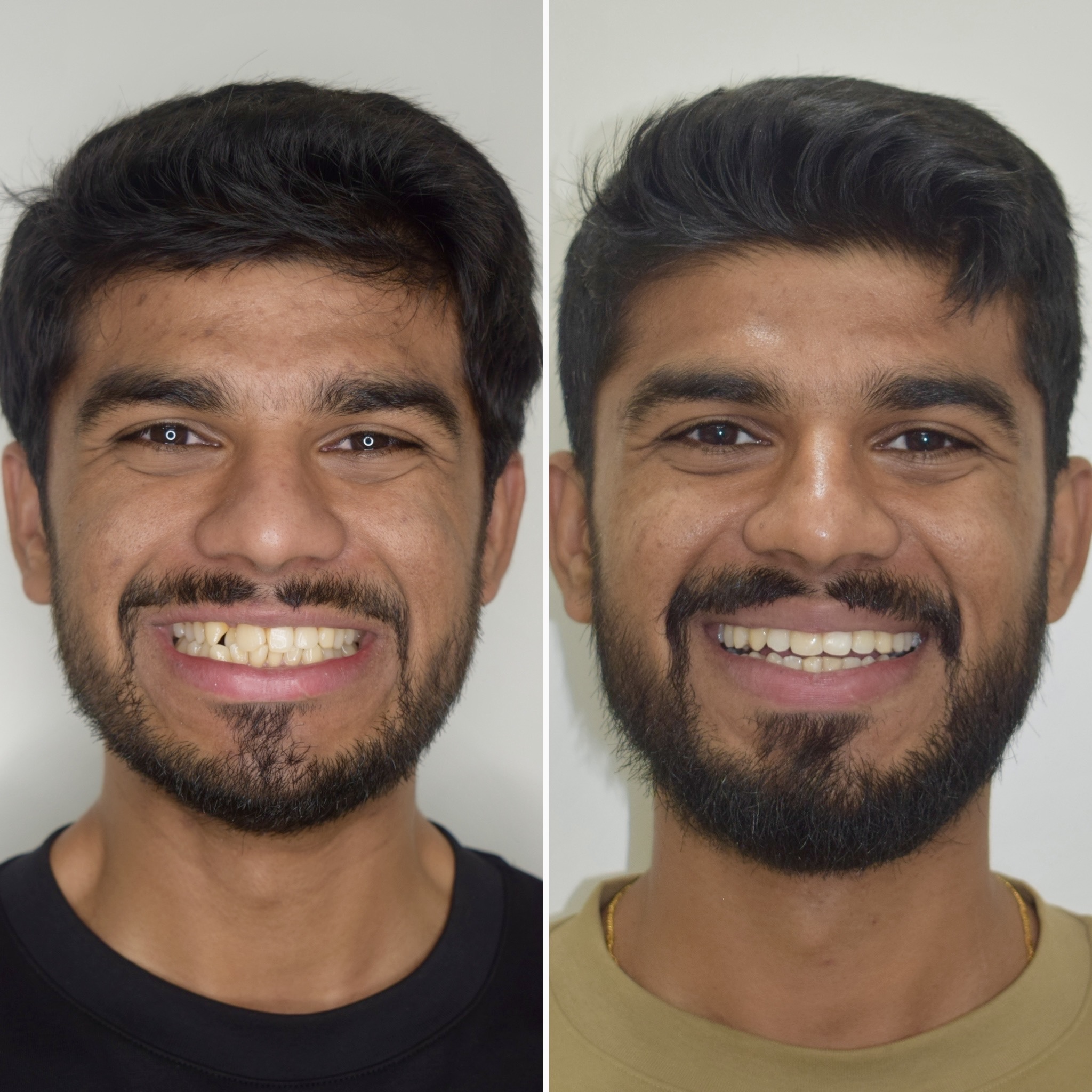
A 29-year-old IT professional came in with mild crowding she had wanted to fix for years but was worried about how braces would look in client meetings. She chose clear aligners. Her treatment took 9 months, and most of her colleagues did not notice until she pointed it out.
A 36-year-old patient came to us with moderate crowding and a deep bite from years of untreated misalignment. She chose ceramic braces. Treatment took 22 months. Her bite was the bigger correction. Her smile looked great by month 10, but the bite work continued through the remainder.
A 44-year-old patient came in for a full mouth assessment, including pre-implant work. He had crowding plus several teeth needing crowns. We sequenced his treatment carefully: gum work first, then orthodontics, then restorative work after braces. Total project around 30 months, but the result was complete oral rehabilitation in his mid-forties.
Common Concerns Adults Have
Three concerns come up at almost every consultation.
“Will My Colleagues Notice?”
Ceramic braces are less visible than metal braces. Clear aligners are a virtually invisible option. Most colleagues do not notice for the first few weeks, and the conversation is usually positive once they do.
“I Have a Wedding or Important Event Coming Up.”
We plan treatment timing carefully. Some patients pause their aligner sequence for a single event. Removable aligners are particularly flexible for this. Talk to us about your dates during the consultation, and we will plan around them.
“How Will I Pay for This?”
We offer flexible payment plans for all treatment types: direct EMI through the clinic spread across treatment visits. We make pricing clear at the consultation, with no surprises later.
Frequently Asked Questions
Q: What is the upper age limit for braces?
There is no upper age limit. We have treated patients in their fifties and sixties. The only requirements are healthy teeth, gums, and bone. A clinical examination will confirm whether you are a suitable candidate, and we will also assess your gum health and overall oral condition.
Q: Do braces hurt more as an adult?
Soreness lasts 3 to 5 days after fitting and after each adjustment. Modern brackets are gentler than older versions. Most adults describe it as a mild ache that resolves with over-the-counter painkillers and soft food. Pain that lasts longer or feels severe is not normal and should be reported.
Q: Will my face change shape if I get braces in my 30s?
Braces can subtly change your smile, lip support, and bite. These changes are usually positive and improve facial balance. They do not reshape your underlying bones. For a detailed answer on what braces actually change about your face, see our braces and face shape guide.
Q: Should I choose Invisalign or braces as an adult?
It depends on the case. Mild to moderate cases work well with clear aligners. Severe crowding or complex bite issues are still better treated with traditional or self-ligating braces. Both produce excellent results when matched correctly to the case. We recommend the right option at your consultation.
Q: Is it worth getting braces in your 40s or 50s?
Yes, if alignment bothers you aesthetically or if the misalignment is causing oral health problems like gum disease, jaw pain, or uneven wear on certain teeth. Many adult patients tell us afterward that it was the best investment they made in their confidence and long-term dental health.
Conclusion
It is not too late. Adults at any age can correct alignment with predictable, professional results. The treatment may take a little longer than for a teenager, but the result quality is identical.
If you have been thinking about braces or clear aligners for years but kept putting it off, book a no-pressure consultation at Orion Dental Specialities in Kothrud. We will examine your teeth, talk through every option that suits your case and lifestyle, and let you decide in your own time.
Medical disclaimer: All treatment options and outcomes on this page are indicative based on typical clinical experience. Specific recommendations are made only after a clinical examination at the clinic.
About the author: Dr. Anagha Kanade Deshpande holds an MDS in Orthodontics and Dentofacial Orthopaedics, is a Fellow of the World Federation of Orthodontists, and is a certified Invisalign provider. She leads the orthodontic practice at Orion Dental Specialities, Kothrud, Pune.