By Dr. Anagha Kanade Deshpande, MDS Orthodontics and Dentofacial Orthopaedics, Orion Dental Specialities, Kothrud, Pune.
A gap between the teeth, most often the upper two front teeth, is very common. Some people love the character it gives their smile and would never change it. Others feel self conscious about it and would like it closed. Both feelings are completely normal, and the good news is that a gap is treatable. This guide explains why gaps happen, the options for closing them, what each costs in Pune in 2026, and how to decide which route is right for you.
I am Dr. Anagha Kanade Deshpande, MDS Orthodontics and Dentofacial Orthopaedics, at Orion Dental Specialities in Kothrud. Gaps are fundamentally a question of tooth alignment, which is core orthodontic territory, though some gaps are more suited to cosmetic treatments handled by our restorative team. My aim here is to give you a clear, honest overview so you can have a confident conversation at your consultation.
What Is a Diastema?
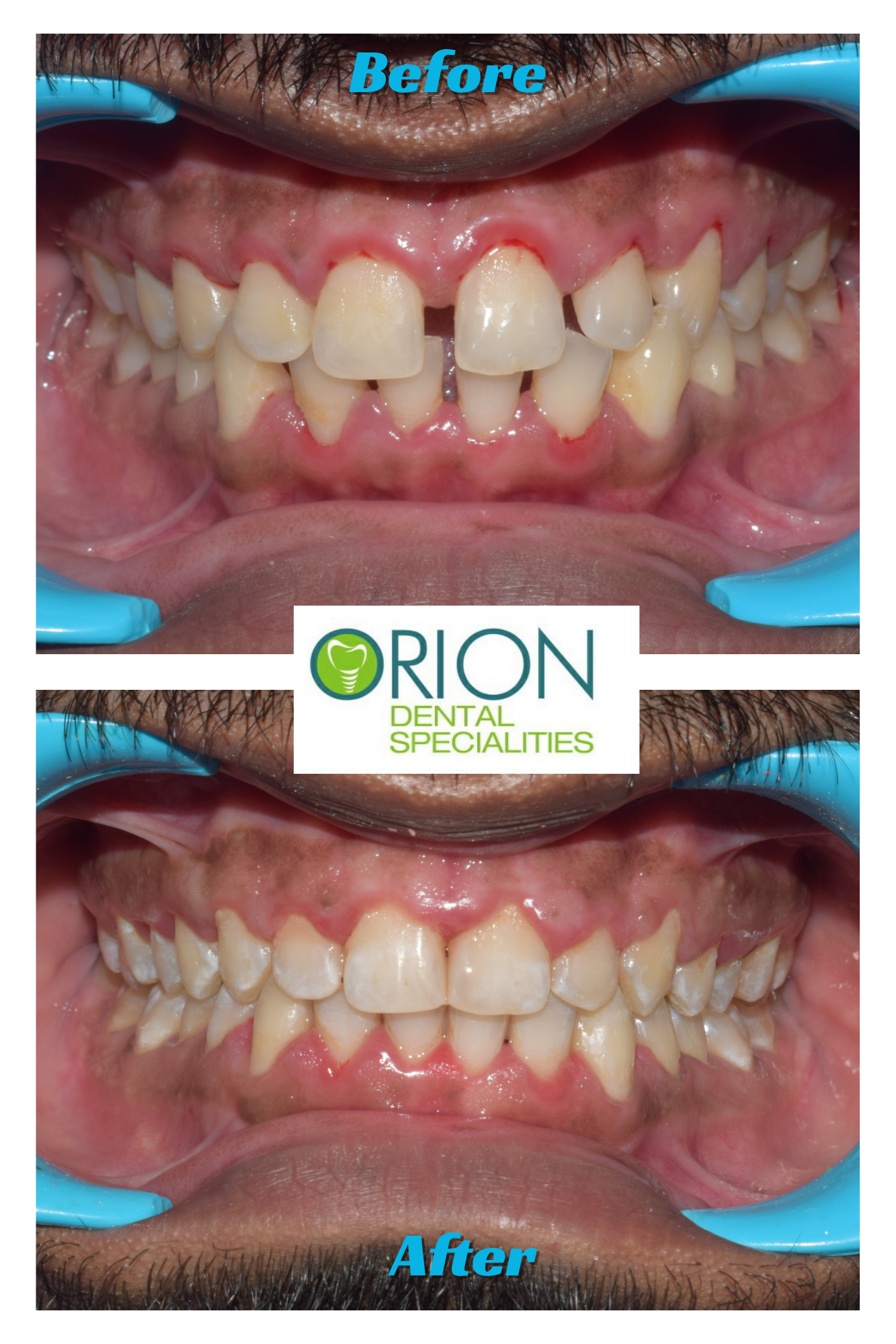
A diastema is simply the medical word for a gap or space between two teeth, most often the upper front teeth. It can be small and barely noticeable, or wider and more obvious. It appears in both children and adults. In children, a gap sometimes closes on its own as the adult teeth come through, but in adults a gap usually stays unless it is treated. Whether it needs any treatment at all depends on what is causing it.
Why Do Gaps Between Teeth Happen?
Gaps form for several reasons, and understanding the cause is the first step toward the right treatment. The most common causes include:
- Genetics. A mismatch between the size of your teeth and the size of your jaw can leave natural spacing between teeth.
- A large labial frenum. This is the small band of tissue that connects the upper lip to the gum above the front teeth. When it is large, it can push the two front teeth apart and hold a gap open.
- Childhood habits. Long term thumb sucking or tongue thrusting, where the tongue presses against the front teeth, can move those teeth forward and create a gap over time.
- Missing or small teeth. A gap can open up when a tooth is missing, or when a tooth is narrower than its neighbours and does not fill the space.
- Gum problems. Gum disease can loosen teeth and allow them to drift, which sometimes creates new gaps in adults who did not have them before.
Do You Need to Close the Gap?
Closing a gap is often a personal choice about appearance, and there is nothing wrong with keeping a gap you are happy with. However, the picture changes if the gap is caused by gum disease or is part of a wider bite problem. In those cases, treatment is advised for the health of your teeth and gums, not just for looks. The simplest way to know which situation you are in is a check up, where we can identify the cause and tell you honestly whether treatment is a cosmetic option or a dental need.
Treatment Options for a Gap Between Teeth
There are several ways to close a gap, and they fall into two broad groups: options that move the teeth into place, and options that hide or fill the gap without moving the teeth. The right one depends on the size of the gap and what is causing it. The main options are:
- Braces (metal or ceramic). Braces physically move the teeth together and are well suited to larger gaps, or when several teeth need aligning at the same time.
- Clear aligners (Invisalign). Near invisible removable trays that move the teeth gradually. A good option for mild to moderate gaps in suitable cases.
- Dental bonding. Tooth coloured resin is added to close a small gap, often in a single visit. It is quick and among the more affordable routes, and it is carried out by our restorative team. This is what many people mean when they search for teeth gap filling.
- Veneers. Thin shells bonded to the front of the teeth to close a gap and reshape the smile at the same time. A cosmetic option, also handled by our restorative team.
- Frenectomy. A minor procedure to release a large frenum, sometimes done alongside orthodontic treatment so that the gap stays closed afterwards.
How Much Does Teeth Gap Treatment Cost in Pune?
The cost depends on which option you choose and how many teeth are involved. Bonding and veneers are usually priced per tooth, while braces and aligners are priced for the full course of treatment. The table below gives representative 2026 Pune ranges so you have a realistic starting point.
| Option | Representative 2026 Pune Range | Notes |
| Dental bonding | Rs 3,500 to Rs 8,000 per tooth | Quick, often single visit, small gaps |
| Veneers | Rs 8,000 to Rs 15,000 per tooth | Cosmetic, also reshapes the teeth |
| Braces (metal) | Rs 25,000 to Rs 50,000 | Moves teeth, suits larger gaps |
| Braces (ceramic) | Rs 40,000 to Rs 70,000 | Tooth coloured option |
| Clear aligners (Invisalign) | from Rs 1,50,000 | Near invisible, mild to moderate gaps |
| Frenectomy | Rs 5,000 to Rs 15,000 | Minor procedure for a large frenum |
Note: These are representative 2026 Pune ranges for guidance only. They are not Orion’s fixed fees. For your exact figure, book a consultation.
Which Option Is Right for You?
The key distinction is simple. Bonding and veneers hide or fill a small gap quickly but do not move the teeth. Braces and aligners actually move the teeth into place, which makes them the correct and desirable choice for larger gaps or when there is an underlying bite issue. In other words, a cosmetic fix can be perfect for a small, isolated gap, while an alignment approach is the more stable answer when the gap is wide or linked to how your teeth bite together. The right option for your smile depends on the size and cause of the gap, and it is decided together at a consultation.
Will the Gap Come Back After Treatment?
It is worth being honest about this. After braces or aligners, teeth can drift back toward their old position, which is exactly why wearing a retainer as advised is so important. The retainer holds the teeth in their new position and keeps the gap closed over the long term. With bonding and veneers, the gap stays hidden, but the material may need occasional upkeep or replacement over the years. None of this is a reason to avoid treatment; it simply means a little maintenance keeps your result looking good.
Does Closing a Gap Hurt?
The process is virtually pain free. Braces and aligners work by applying gentle pressure, which can feel like mild tightness for a day or two after they are placed or adjusted, and this settles quickly. Dental bonding is comfortable and usually needs no anaesthetic at all. Most patients are surprised by how straightforward and manageable the whole experience is.
Payment Options
Treatment can often be staged across visits, which helps spread the cost in a way that suits you. At Orion Dental Specialities, we offer direct clinic instalment plans, and we are happy to talk you through the options during your consultation.
Frequently Asked Questions
Why do I have a gap between my front teeth?
Common causes include genetics, a large frenum, which is the band of tissue between the lip and gums, childhood habits like thumb sucking, missing teeth, or gum problems. An examination identifies the cause, which then guides the right treatment for you. Knowing the cause matters, because it decides whether a cosmetic or an alignment approach suits you.
What is the fastest way to close a tooth gap?
For a small gap, dental bonding can often close it in a single visit, which is why it is a popular teeth gap filling option. Larger gaps, or gaps with misalignment, usually need braces or clear aligners. These take longer but move the teeth into a stable position rather than simply hiding the space.
Is it better to fix a gap with braces or bonding?
It depends on the gap. Bonding or veneers hide a small gap quickly but do not move the teeth. Braces and aligners move the teeth into place and give more stable, long lasting results for larger gaps or bite issues. A consultation is the clearest way to decide which route suits your smile.
Will my tooth gap come back after treatment?
It can, especially after braces or aligners, which is why wearing a retainer as advised is important. The retainer holds the teeth in their new position and keeps the gap closed over time. With bonding or veneers, the gap stays hidden, though the material may need occasional upkeep over the years.
Does closing a gap hurt?
No, the process is virtually pain free. Braces and aligners create gentle pressure that can feel like mild tightness for a day or two, which settles quickly. Dental bonding is comfortable and usually needs no anaesthetic. Most patients find the experience much easier than they expected.
Three things are worth remembering. Gaps between the teeth are common and have several possible causes, from genetics to a large frenum to gum problems. There are options that either move the teeth, such as braces and aligners, or hide the gap, such as bonding and veneers. And the right choice depends on the size and cause of your gap, which is assessed in person.
If you would like to know which option fits your smile, we warmly invite you to book a consultation at Orion Dental Specialities in Kothrud. We will examine your teeth, explain the cause of the gap, and talk through the options with you honestly and without any pressure.
Medical disclaimer: All price ranges on this page are representative 2026 Pune figures based on market observation and are for guidance only. They are not Orion Dental Specialities’ fixed fees. Actual treatment costs are determined only after a full clinical examination and individualised treatment planning.
About the author: Dr. Anagha Kanade Deshpande holds an MDS in Orthodontics and Dentofacial Orthopaedics and practises at Orion Dental Specialities in Kothrud, Pune. Her work covers braces and clear aligners, with cosmetic options such as bonding and veneers delivered by Orion’s restorative team, all with a focus on comfortable, honest patient care.